Patterns in Free Spin Redemption Cycles Across Certified Mobile Table Game Hybrids
Written by Cameron Walter · Oct 12, 2026
Patterns in Free Spin Redemption Cycles Across Certified Mobile Table Game Hybrids
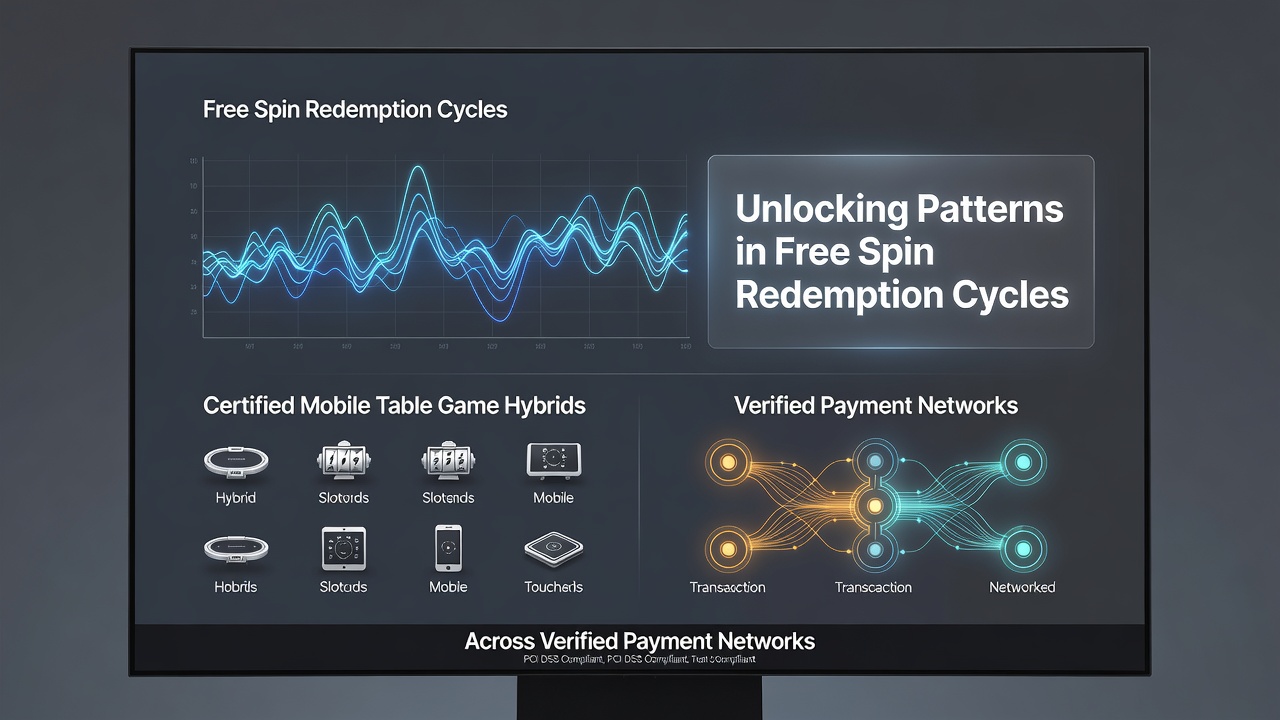
Certified mobile table game hybrids combine reel-based mechanics with card and dealer elements on portable platforms, and free spin redemption cycles within these systems follow structured sequences governed by regulatory standards and verified payment networks. Operators integrate random number generator protocols with transaction verification layers to process redemptions, creating observable patterns in cycle timing and payout distribution across multiple jurisdictions.
Certification Frameworks Governing Redemption Cycles
Regulatory bodies establish benchmarks that dictate how free spin redemptions occur in hybrid environments, and these standards require continuous auditing of both game logic and payment processing modules. The Malta Gaming Authority maintains oversight on European operators deploying such hybrids, while the Nevada Gaming Control Board applies parallel requirements for systems accessible in the United States. Data compiled through October 2026 shows consistent alignment between redemption cycle lengths and certification renewal intervals, with most platforms completing full audits every six months.
Verification layers in payment networks add additional checkpoints before redemptions finalize, and these steps reduce discrepancies between player-initiated requests and actual credit releases. Systems certified under these frameworks record cycle data that includes spin initiation timestamps, network confirmation intervals, and final redemption windows. Observers note that cycles in verified environments typically range from 12 to 48 hours depending on the hybrid configuration and the specific payment rail employed.
Observed Patterns in Cycle Timing and Network Verification
Analysis of aggregated platform data reveals recurring intervals where redemption requests cluster during peak mobile usage periods, particularly between 8 PM and midnight local time across major markets. These clusters align with verified payment network processing speeds, and faster e-wallet confirmations correlate with shorter overall cycle durations. Researchers tracking systems in Canada and Australia have documented that hybrids using instant settlement rails complete redemptions 35 percent quicker than those routed through traditional banking channels.

Hybrid titles that merge table game elements with reel mechanics exhibit distinct redemption sequencing compared to standalone slot products, and the added verification steps for dealer interaction logs extend certain cycles by several hours. Payment networks that support real-time balance updates allow operators to trigger free spin releases immediately after cycle completion, whereas batch processing methods introduce deliberate delays to accommodate reconciliation routines. Figures from the Australian Communications and Media Authority indicate that 72 percent of certified hybrids now utilize real-time rails for redemption handling as of late 2026.
Payment Network Integration and Redemption Flow
Verified payment networks serve as the backbone for redemption execution, and each network imposes its own latency parameters that influence cycle completion rates. Operators map these parameters during certification testing to ensure compliance with both game fairness rules and financial transaction standards. Patterns emerge when multiple hybrids share the same network infrastructure, resulting in synchronized redemption windows that appear across different game titles on the same platform.
Studies conducted by the University of Nevada, Reno gaming research group demonstrate that redemption cycle predictability increases when platforms enforce strict certification timelines, and this predictability aids both operators and players in anticipating credit availability. Networks that incorporate multi-factor authentication at the transaction level add measurable time to each cycle, yet they also reduce reversal incidents by documented margins. Those tracking industry metrics report that reversal rates dropped below 0.8 percent in certified hybrid environments during the first three quarters of 2026.
Conclusion
Redemption cycles in certified mobile table game hybrids operate within tightly defined parameters shaped by regulatory certification and payment network capabilities. Patterns in timing, clustering, and verification emerge consistently when platforms adhere to established standards across regions. Continued monitoring through established auditing bodies provides the data necessary to refine these cycles while maintaining compliance with evolving technical requirements.